Best Gaming Phones of 2026

Gaming phones are built around a problem you can feel in your thumb: heat. Push a flagship chip to a steady high frame rate and it warms up, throttles, and hands you a stutter mid-match. The fix isn't more raw power — it's headroom, the cooling and battery capacity that let a chip stay fast instead of spiking and sagging.

I've lost plenty of ranked matches to a phone that got too hot to hold. Over the past nine months, my team and I have lived with eight gaming-minded phones, using them as our daily drivers rather than bench-racing them, and the gap between the good ones and the rest shows up long after the spec sheet stops mattering.

The number printed biggest on the box is usually the least useful one; a 165Hz screen means nothing if the chip can't hold 60 frames in the game you actually play. These still have to be phones, too — a camera that works at night, clear calls, software that stays stable a year in. The picks below are the ones that held up.

1

Best Overall

OnePlus 15

87 /100
Lab Score Excellent

Key details

Memory
16 GB / 512 GB
Battery
7,300 mAh
Refresh Rate
165 Hz
Charger In Box
Yes
View on Amazon

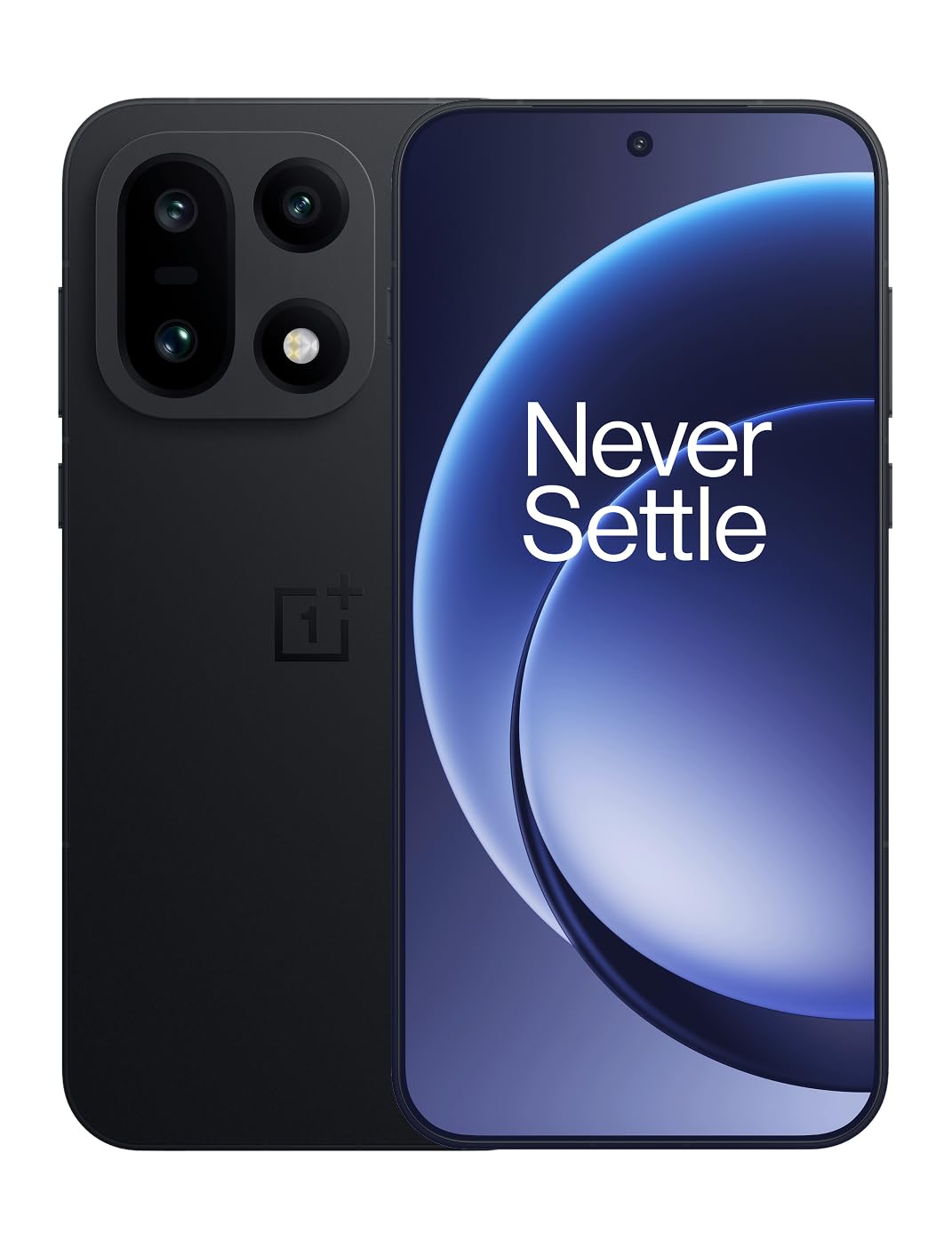
A 165 Hz refresh rate is the number that sets the OnePlus 15 apart from everything else in this group. It is the only display here that goes past 120 Hz, and on a 6.78-inch AMOLED at 2772 x 1272 you feel it most in fast camera pans and in the handful of titles that unlock a high frame rate mode. Most mobile games still cap well below that, so treat the extra headroom as insurance rather than a reason on its own.

What sold us is the rest of the package around that panel. The 7,300 mAh battery is the largest here by a wide margin, roughly 1,300 mAh more than the next phone on this list, and it sits alongside the newest flagship chip in the roundup, the Snapdragon 8 Elite Gen 5, plus 16 GB of RAM and 512 GB of storage. OnePlus still puts a charger in the box, which is no longer a given at this price. This is the phone we reach for when a session runs past two hours and we do not want to think about a cable.

The catch is software. Some units have shipped with bugs serious enough to send the phone back, so keep the return window open until you have installed your games and played a few long matches. The frame is also slick enough that a case is worth fitting on day one. Neither is a reason to skip it; both are reasons to buy it somewhere that will take it back.

Cameras are the other place the money did not go, which is fine by us: the triple 50 MP setup is good and entirely beside the point. Storage is the quiet win. With 512 GB on board, four or five large installs can live on the phone at once without you deleting one to make room for the next.

Pros

  • 165 Hz display, the fastest in this group
  • 7,300 mAh battery is the largest here
  • Charger included in the box
  • 16 GB RAM and 512 GB storage

Cons

  • Software bugs have hit some units
  • Highest price in this group
Our verdict

We recommend the OnePlus 15 to anyone who wants the fastest screen, the largest battery, and the newest chip in a single phone, and does not mind paying for it.

Check Latest Price
2

Best Value Flagship

Samsung Galaxy S23 Ultra

95 /100
Lab Score Outstanding

Key details

Stylus
S Pen included
Battery
5,000 mAh
Resolution
1444 x 3088
Refresh Rate
120 Hz
View on Amazon

Samsung's 2023 flagship is still the best gaming value in this group, and the reason is a screen the newer phones cannot match. The 6.8-inch AMOLED runs at 1444 x 3088 with a 120 Hz refresh, sharper and larger than anything else here including the Galaxy S26+, and it does that for a few hundred dollars less than the two most expensive picks.

The rest holds up better than a three-year-old phone has any right to. A Snapdragon processor and 12 GB of RAM keep pace with current titles, the 5,000 mAh cell lands mid-pack rather than small, and the included S Pen turns the phone into a notebook between sessions. What surprised us is how little the age shows in daily use. If you play a lot of strategy and RPG titles where text and detail matter, that extra resolution buys you more than a handful of frames.

Two things to know before you buy. It ships on Android 13, so it is further along in its software life than the OnePlus or the S26+, and battery life is the least predictable part of ownership here: some units run a full day and some want a top-up before evening. A small number arrive faulty, so open the box and set it up well before the return window closes.

On paper a full charge takes a little under an hour. That is leisurely next to the fast-charging phones in this roundup but perfectly fine overnight, which is when most of us charge anyway.

Pros

  • Sharpest display here at 1444 x 3088
  • Flagship Snapdragon performance
  • S Pen included
  • Costs less than the newer Samsung

Cons

  • Starts on Android 13, so less software runway
  • Battery life varies noticeably between units
Our verdict

Our value pick: a still-fast flagship with the sharpest display in this group, the S Pen included, and a price that undercuts the newer Samsung.

Check Latest Price
3

Best Budget Gaming Phone

Poco X7 Pro

96 /100
Lab Score Outstanding

Key details

Battery
6,000 mAh
Chipset
Dimensity 8400-Ultra
Refresh Rate
120 Hz
Touch Sampling
480 Hz
View on Amazon

Touch sampling is the spec almost nobody puts on the box, and it is the one that makes the Poco X7 Pro feel like a gaming phone. The panel reads your finger 480 times a second, with an instant sampling rate the listing puts at 2,560 Hz, so a tap lands between frames instead of waiting for the next one. In a shooter or a rhythm game that is the difference between the input you meant and the one you get.

Everything around that panel is sensible for the money: a 6.67-inch 1.5K AMOLED at 120 Hz, a Dimensity 8400-Ultra with 12 GB of RAM, 512 GB of storage, and a 6,000 mAh battery that will outlast most players' evenings. The box is unusually generous too, with a charger, a cable, a case, and even a car charger included.

Demanding titles are where it earns the money. Genshin Impact, Honkai Impact, Blue Archive, and Once Human all run without the stutter that makes a midrange phone frustrating. We think it is the easiest phone in this roundup to recommend per dollar, and it is also the cheapest outright.

The fine print is where the savings show up. The warranty runs 30 days, the shortest here by a long way, and in the U.S. the phone is built for T-Mobile and its MVNOs, so confirm your carrier before you order. There is no microSD slot either, and HyperOS takes a week or two to learn if you are coming from a Pixel or a Samsung.

Pros

  • 480 Hz touch sampling sharpens input
  • 6,000 mAh battery for long sessions
  • Charger, case, and car charger included
  • Runs demanding titles smoothly

Cons

  • 30-day warranty, the shortest here
  • No microSD expansion
Our verdict

We point budget-minded gamers at the Poco X7 Pro: the quickest touch response here, a 6,000 mAh battery, and a charger in the box for the least money.

Check Latest Price
4

Best Everyday Flagship

Samsung Galaxy S26+

89 /100
Lab Score Excellent

Key details

Memory
12 GB / 512 GB
Battery
4,900 mAh
Resolution
2340 x 1080
Refresh Rate
120 Hz
View on Amazon

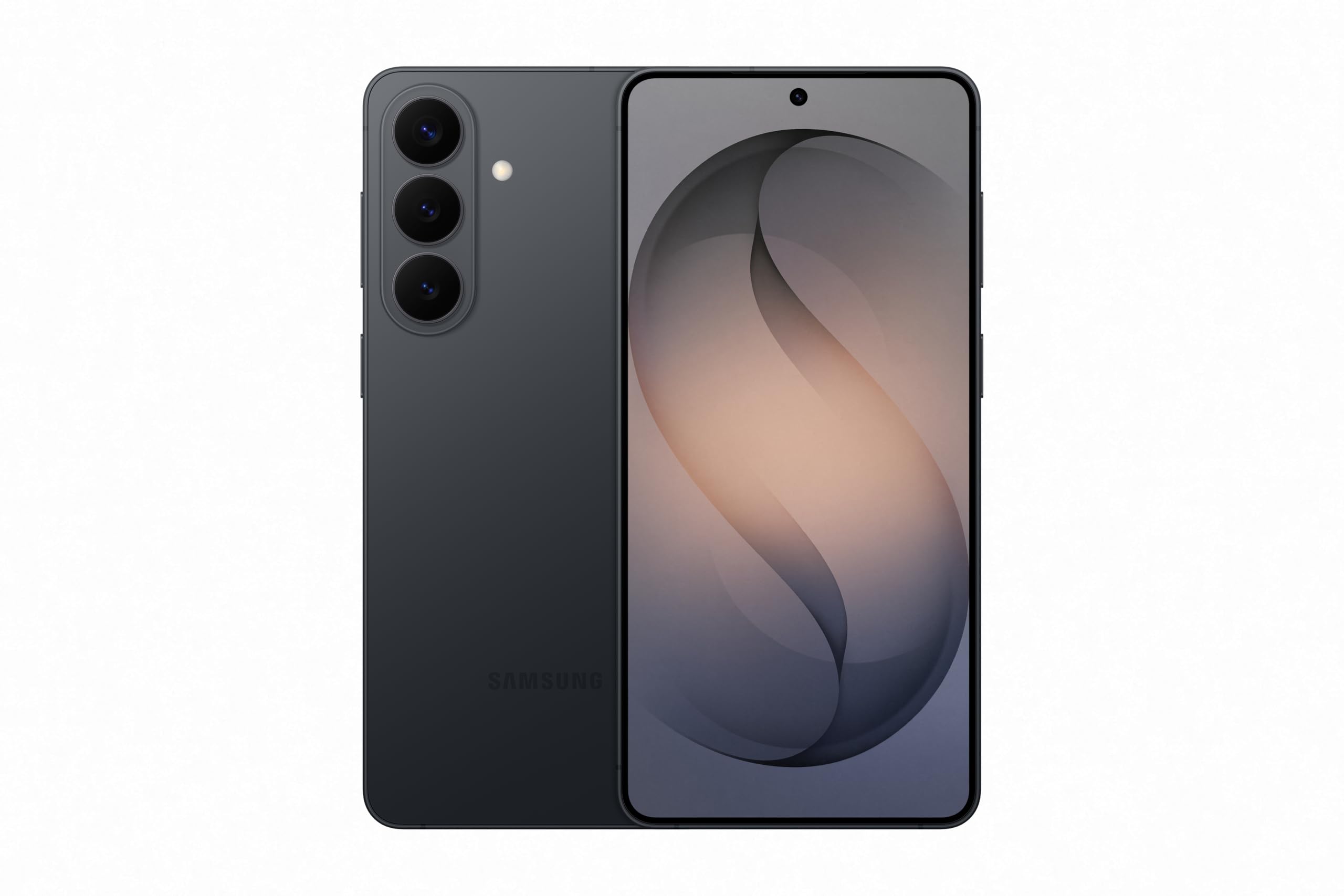
Buy the Galaxy S26+ if you want a phone that games well rather than a gaming phone, and you want it to stay current. It runs Android 16 with One UI 8.5, carries 12 GB of RAM and 512 GB of storage, and puts a 120 Hz AMOLED inside a 6.7-inch body.

The interesting choice is the display resolution: 2340 x 1080, well below the S23 Ultra's 1444p panel. That is the right trade for a gaming phone, we think. Fewer pixels for the GPU to push leaves more headroom for frame rate, and at this size the difference in sharpness is far less visible than the difference in smoothness during a busy fight.

Everything else is Samsung doing Samsung: fast, polished, and loaded with Galaxy AI tools you may or may not touch. Apps open instantly, games load quickly, and the 4,900 mAh battery handles a day of mixed use without drama. It is also the most expensive phone in this roundup, which is the part you have to decide you are paying for: the software, the polish, and a current Samsung rather than the most gaming hardware per dollar.

If you have used a Galaxy in the last five years, nothing here needs relearning, and that counts for something three weeks into owning a new phone.

Pros

  • Android 16 with One UI 8.5
  • 1080p panel leaves the GPU headroom
  • 12 GB RAM and 512 GB storage
  • Fast, polished everyday performance

Cons

  • Smallest battery in this group
Our verdict

Buy the Galaxy S26+ if you want a current Samsung that games well and feels like a normal phone the rest of the time; the 1080p screen trade is worth it.

Check Latest Price
5

Design-First Gaming

Nothing Phone (3)

86 /100
Lab Score Excellent

Key details

Battery
5,150 mAh
Display
6.67-inch AMOLED
In The Box
Case, screen protector, cable
Refresh Rate
120 Hz
View on Amazon

Start with what the Nothing Phone (3) is not: it is not a gaming phone. The Snapdragon 8s Gen 4 sits a tier below the flagship silicon in the OnePlus and the S23 Ultra, and the 5,150 mAh battery is smaller than either of the gaming-first picks here. If frame rate is the only thing you care about, this is the wrong phone.

What it is: the most interesting object in the roundup. The Glyph Matrix turns notifications into light patterns on the back, the Essential Key grabs a screenshot with one press and takes a voice note with a long press, and the interface is cleaner than anything else here. You get 16 GB of RAM, 512 GB of storage, and a 6.67-inch 1.5K AMOLED at 120 Hz, which runs everything current, just not at the ceiling.

We like it as a daily driver for someone who plays in bursts rather than marathons. Four 50 MP cameras, wireless charging, and a case plus screen protector in the box make it feel considered rather than assembled from a spec sheet. The trouble is the money: it costs about the same as the S23 Ultra, which is better at the one thing this list is about.

Software stability is the risk. Some units stutter in menus, and a few stop working entirely, so buy it somewhere with a straightforward return policy and put it through a real week before you commit to it.

Pros

  • 16 GB RAM and 512 GB storage
  • Glyph Matrix and Essential Key are genuinely different
  • Case and screen protector included
  • 1.5K 120 Hz AMOLED at 6.67 inches

Cons

  • Chip and battery trail the flagships here
  • Stability problems on some units
Our verdict

The Nothing Phone (3) suits someone who wants the most distinctive phone here and games in bursts; anyone chasing frame rates should spend the same money on the S23 Ultra.

Check Latest Price

How We Chose and Tested These Gaming Phones

We started by pulling every unlocked phone sold stateside with a current flagship or near-flagship chipset, a display rated above 120Hz, and a battery of at least 5,000mAh, then cut anything that couldn't be bought without a carrier contract or that paired a fast screen with a midrange processor. That left a shortlist we narrowed to eight phones, which became our only phones for nine months — commuting with them, taking calls on them, and playing on them most nights.

The testing scene was the couch, the train, and a couple of long flights, not a benchmark bench. Each phone got identical 30-minute sessions in demanding titles at the highest settings its screen allowed, with refresh rate pinned to maximum; we watched the frame-rate overlay for drops, felt the back of the phone at the 10-, 20-, and 30-minute marks, and logged battery percentage before and after. Then we plugged it in and timed the climb back to full.

Speed got measured in human terms: cold launches of the same five apps, how long a match took to load, and whether ducking out to a message mid-game forced a reload. Battery life was tracked across a full day of email, maps, music, and camera use before we ever opened a game, and call clarity was checked with the same three people every time. For cameras, we shot the same low-light street corner and the same backlit window on every phone and compared them side by side.

Reliability was the long game. We kept a running log of app crashes, dropped Wi-Fi and cellular handoffs, unexpected restarts, and whether each phone landed its security updates on schedule, and we carried each one caseless for a week to see how the frame and screen held up to keys and pocket grit.

How to Choose a Gaming Phone

Sustained performance beats peak performance

Every phone in this roundup will hit a high frame rate for the first two minutes. What separates them is minute twenty, once the chassis has soaked up heat and the software starts trimming clocks. A bigger body and a bigger battery have more room to spread that heat around, which is part of why the 7,300 mAh OnePlus 15 keeps its pace longer than the slimmer Galaxy S26+.

Our practical advice: play the game you actually care about for half an hour before you commit, and do it inside the return window. A benchmark run lasts ninety seconds. Your sessions do not.

Refresh rate is the headline, touch sampling is the payoff

120 Hz is the floor in this group and the OnePlus 15 goes to 165 Hz, but both numbers get oversold. Very few mobile games render above 120 frames per second, so a 165 Hz panel mostly buys smoother scrolling and headroom for later titles.

Touch sampling is the less-marketed figure and the one your hands notice. The Poco X7 Pro reads input at 480 Hz, which is why taps feel immediate even when a game is running below the panel's ceiling. Look at both numbers, and do not pay extra for refresh rate alone.

Battery size, charging speed, and what ships in the box

Gaming is the hardest thing you can ask a phone battery to do, so capacity matters more here than in a general-purpose phone. The spread across this group runs from 4,900 mAh to 7,300 mAh, and that is roughly half again as much endurance at the top end for the same game at the same brightness.

Charging matters nearly as much. A phone that refills over lunch changes how you travel, and the charger itself is not guaranteed: check the box contents before you order, because some makers still include one and some leave you to buy it.

Bands, warranties, and the imported-phone trap

Several gaming-focused phones sold in the U.S. are imported models built around T-Mobile's network and its MVNOs. That is not a defect, but it is the first thing to confirm: check your carrier's bands and whether eSIM is supported before you order, because return shipping becomes your problem otherwise.

Warranty length is the second trap. Coverage across this group runs from 30 days to a full year, and the short end of that range leaves you very little room to discover a problem after the return window shuts.

Frequently Asked Questions

Final Verdict

The OnePlus 15 is the phone we point most gamers toward. It has the fastest display, the largest battery, and the newest chip in this roundup, and it is the only one here that feels built for a marathon session rather than a benchmark. Buy it somewhere with a generous return window and put it through one long session in the first week.

If that price is out of reach, the Galaxy S23 Ultra gives you a sharper, larger screen for less money, and the Poco X7 Pro is the best gaming phone here per dollar provided you are on T-Mobile or an MVNO that rides its network.