Best Chess Computers of 2026

Chess has a lopsided problem: learning the rules takes an afternoon, but finding someone at your level who wants to play at 9 p.m. on a Tuesday takes years. An electronic board solves that. It sits on the table, plays a real game back at you, and lets you push actual pieces around instead of dragging a knight across a phone screen — which is the part most of us actually want.

The boards on our shortlist differ less in playing strength than in how they talk to you. Some light up the square you should move to, some put a small display on the side, and a few say nothing at all. The extra money usually buys smoother piece sensing and better-feeling pieces, not a stronger opponent.

We've spent eight months playing on 10 of them — in living rooms, hotel rooms, and at kitchen counters — with adults who've played for decades and kids still learning to castle. Some are built for solo practice, some for teaching, and a couple are nice enough to leave out on a table.

1

Best Overall

GoChess Air

85 /100
Lab Score Excellent

Key details

Coaching
Real-time color lights
Board Size
13 x 13 in
Online Platforms
Lichess and Chess.com
Difficulty Levels
32
View on Amazon

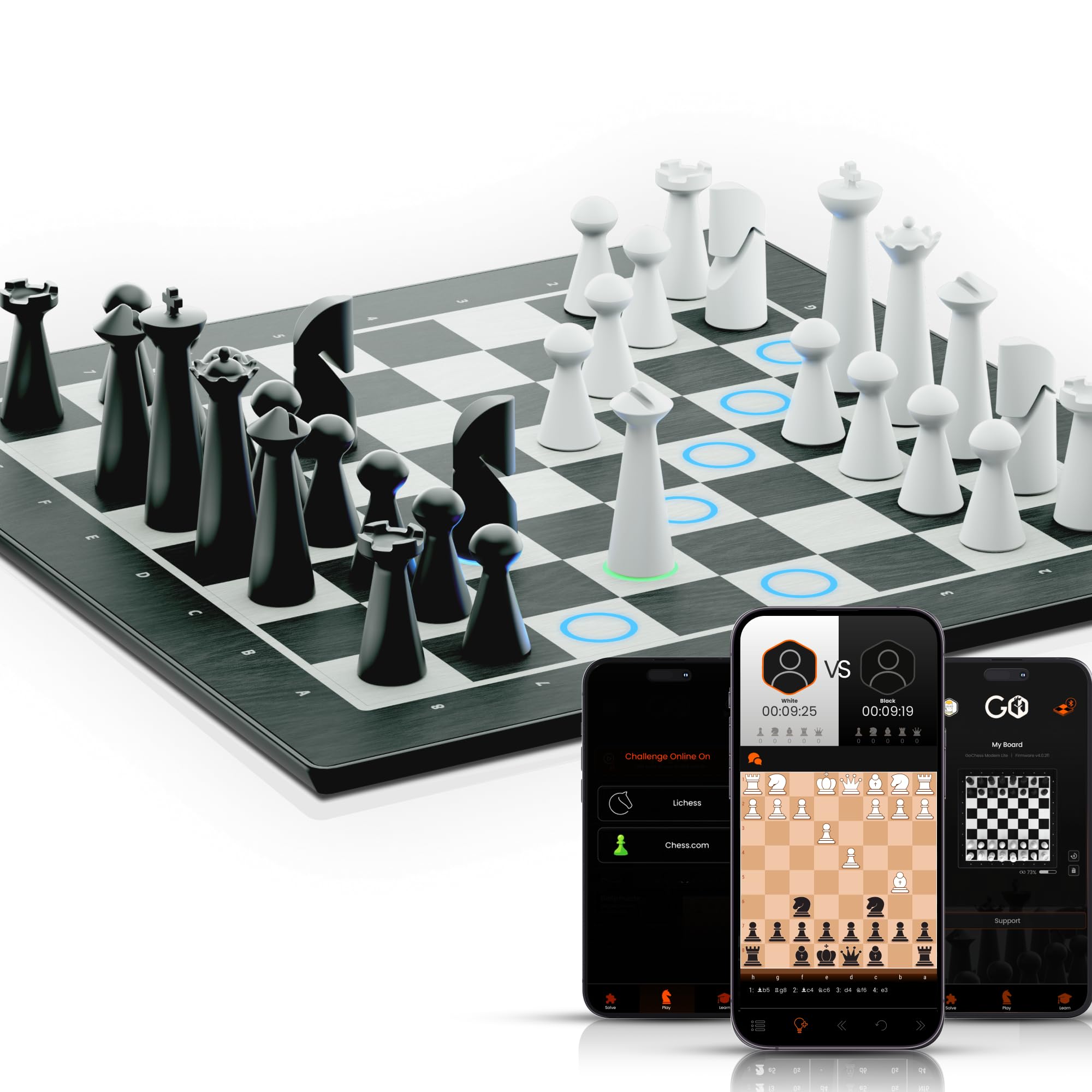
The coaching lights are what make the GoChess Air more than another sensor board. As you move, the squares light up with legal moves and suggestions, so you can see why a move works without opening an analysis tab. With 32 levels and separate assistance settings for each player, a beginner and a stronger player can sit down together and still get a useful game.

The 13-inch board is a good desk size. We appreciated the two piece pouches and the phone stand, because the app is part of the system, not a bonus; online play runs through Lichess and Chess.com, and the AI and coaching live in the app. That is also where our reservation sits. A connection that drops mid-game turns a physical board into a phone accessory, and the board does not switch to an on-board opponent by itself. We also treat it as a table fixture: 6.3 pounds is substantial, and the board is not something we pack for a tournament weekend without a proper case.

For most homes, though, this is the balance we want: real pieces, useful lights, serious online opponents, and a coaching layer that does not feel like homework. The two pouches are a thoughtful detail, but ours stays set up on the desk between sessions.

Pros

  • 32 levels with per-player assistance
  • Real-time color light coaching
  • Online play on Lichess and Chess.com
  • 13-inch board with real pieces

Cons

  • Needs a phone or tablet for app features
Our verdict

We recommend the GoChess Air as the best first smart board for most homes: its light coaching, 32 levels, and online play make practice and real games feel equally easy.
Check Latest Price
2

Best No-Phone Online Play

ChessUp 2

86 /100
Lab Score Excellent

Key details

Coaching
Light-up move guidance
Board Size
15.5 x 13.5 in
Connectivity
Built-in Wi-Fi
Online Platforms
Chess.com and Lichess
View on Amazon

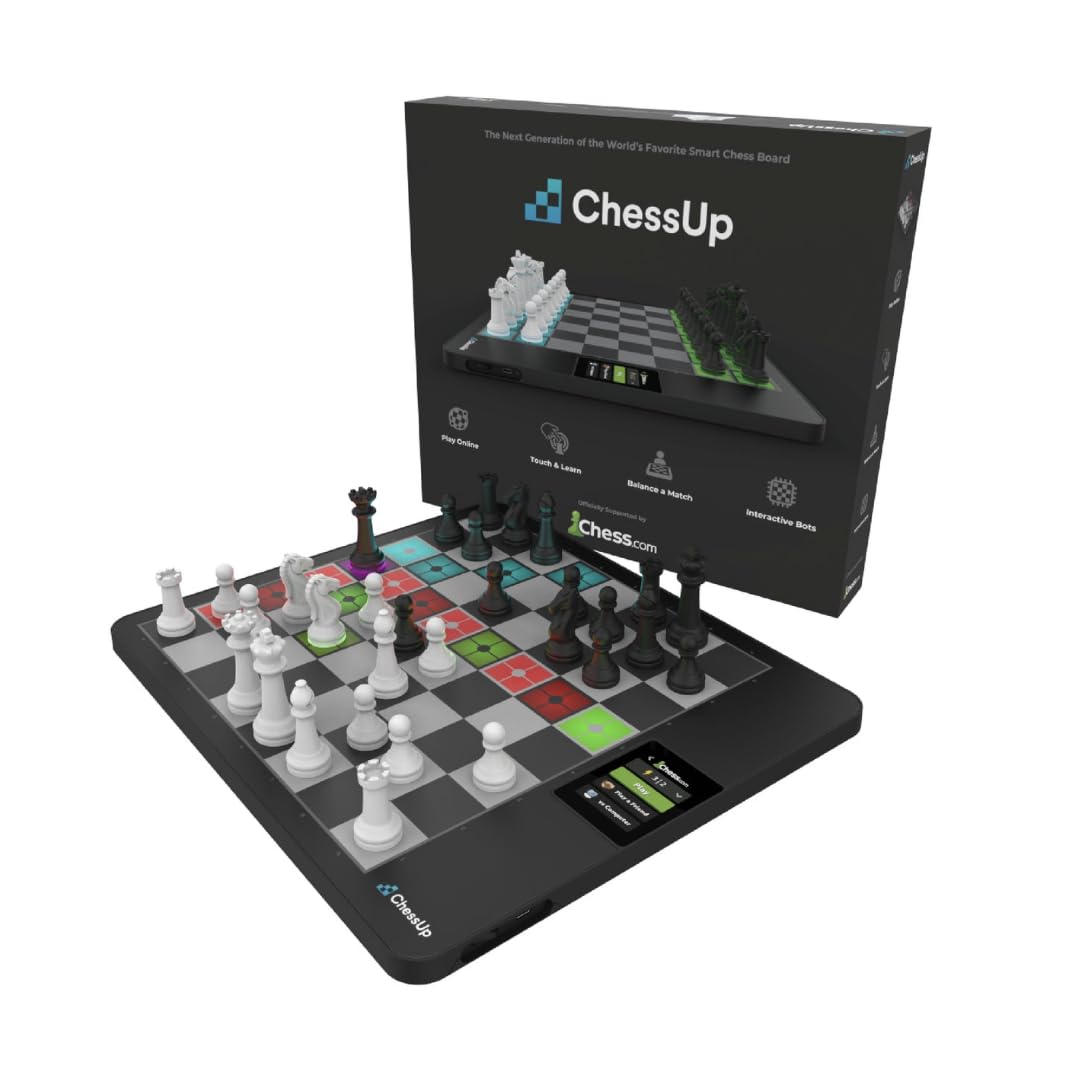
ChessUp 2 is built for the player who does not want a phone propped beside the board. It connects to Chess.com and Lichess over built-in Wi-Fi, so a real online opponent can meet you at a real chessboard without a handset in the middle.

The light-up squares show legal moves and can give each player a different amount of help. That is a better arrangement for family games than one global difficulty setting: a parent can play seriously while a child gets suggestions. Lessons and post-game review live in the companion app, which is where we prefer that heavier reading to sit.

The board is big at 15.5 by 13.5 inches, so measure the table before you commit. This is not a travel computer; it is a board that wants a permanent spot. The plastic pieces also feel lighter than the rest of the package suggests, and a playing surface that arrives warped is a problem because recognition depends on a flat panel.

What tips it for us is the no-phone experience: we can sit at a physical board, meet a real opponent, and keep the coaching on the board rather than in a handset. At 15.5 by 13.5 inches, it still leaves room for a clock on a small table.

Pros

  • Built-in Wi-Fi with no phone needed
  • Per-player coaching help
  • Online Chess.com and Lichess play
  • Light-up move guidance and lessons

Cons

  • Pieces feel light for a premium board
  • A warped board can miss moves
Our verdict

Choose ChessUp 2 if you want to play online without a phone at the board; the built-in Wi-Fi and per-player coaching justify the premium for a connected household.

Check Latest Price
3

Best Screen-Free Computer

DGT Centaur

86 /100
Lab Score Excellent

Key details

Pieces
Weighted Staunton
Display
LED squares and e-paper
Board Size
17.5 x 15.8 in
Skill Adaptation
Adjusts to player
View on Amazon

There is no app here, and that is the point. The DGT Centaur is the board for someone who wants the computer to live entirely in the board: switch it on, set out the pieces, and play. Its adaptive engine adjusts as you play instead of asking you to choose a number, and the 17.5-inch board gives the set real presence.

The weighted pieces and lit squares make the physical side feel considered. The board shows the computer's move through the squares, and the e-paper display keeps the game information visible without glowing like a tablet. We found that combination easy to live with: no pairing, no account, no notification breaking the game.

The pieces are weighted but slide too easily, so a bumped table can shift a rank. This is also a screen-free board by design: no online opponents and no app review. At 17.5 inches, it dominates a small desk, but it is the board that feels most like a real set rather than a gadget.

Pros

  • Adapts to your level as you play
  • Large 17.5-inch board
  • Weighted pieces and LED move lights
  • No app or Wi-Fi required

Cons

  • Lights can fail after extended use
Our verdict

The DGT Centaur is for the player who wants a strong, adaptive opponent with no app, no pairing, and no screen between them and the board.

Check Latest Price
4

Best Wooden Smart Board

Chessnut Air

84 /100
Lab Score Excellent

Key details

Material
Plastic and wood
Board Size
13 x 13 in
Online Platforms
Chess.com and Lichess
Piece Recognition
Full
View on Amazon

The Chessnut Air does its best work before anyone turns it on: the wood-look board and plastic pieces look like a set you can leave out, not a gadget that needs to be packed away after every game. That matters more than it sounds in a category full of dark plastic boards.

What keeps it in the roundup is full piece recognition. Move a piece and the board knows which one, so you can play against the app, take the position online, or record a face-to-face game without tapping squares. That physicality is the whole appeal: you are moving real pieces, not sliding a cursor.

The companion app handles the AI, game review, and online connections to Chess.com and Lichess. The board also stores up to 20 games for later review, which is a useful bridge if you play away from the app. We like that the technology stays mostly invisible until you ask for it.

It is not the most hand-holding board here; if you want lights telling you what to do, choose the GoChess Air. The 20-game memory is a quiet bonus for club nights: you can replay a face-to-face game without taking notes.

Pros

  • Wood-look board and pieces
  • Full piece recognition
  • Online Chess.com and Lichess play
  • Stores 20 games on board

Cons

  • Small pieces on a 13-inch board
  • App connection can drop mid-game
Our verdict

We recommend the Chessnut Air for anyone who wants a traditional-looking board that still plays online and recognizes every piece, provided a compact set suits their table.

Check Latest Price
5

Best for Advanced Players

Millennium ChessGenius Pro

85 /100
Lab Score Excellent

Key details

Pieces
Magnetic
Display
Color LCD
Board Size
11.6 x 8.3 in
Engine Rating
2200 ELO
View on Amazon

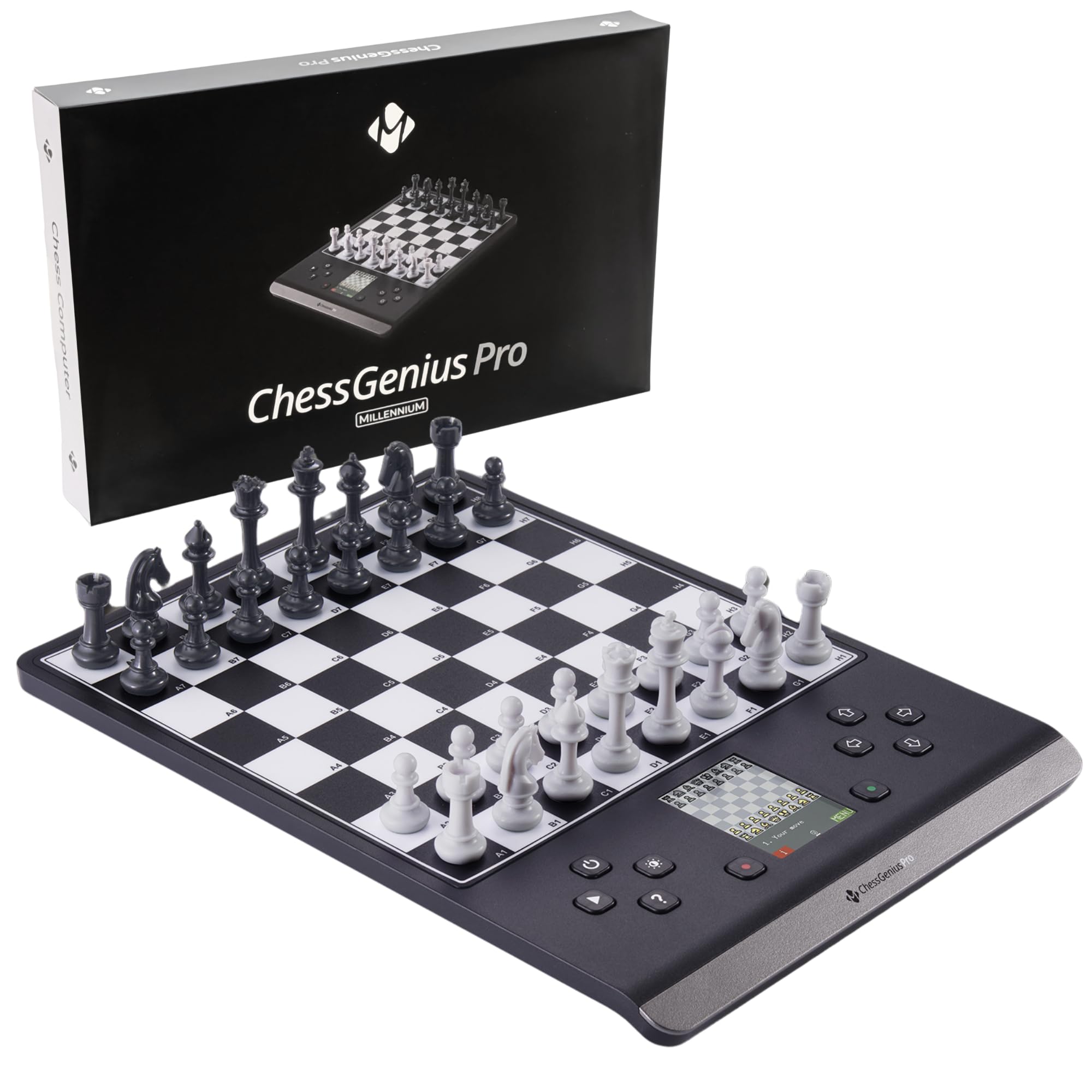
The number that matters on the Millennium ChessGenius Pro is 2200: that is the rated strength of its ChessGenius engine, and it puts this board in a different class from the beginner-first computers here. For a serious player who wants resistance without a screen, this is the one in this group.

The trainer is what makes that strength useful. It offers hints and takebacks, and the automatic piece recognition tracks the game on a real board while the color LCD shows the information you need. We like that the board does not require a phone, a subscription, or an online account to give a serious game. The magnetic pieces and storage bag make it a reasonable travel companion.

The trade-off is that this is a focused practice tool, not a connected board: no online opponents and no app analysis. It is also built for travel rather than display. The piece storage bag is a small thing, but it keeps the magnetic set together between sessions.

Pros

  • Rated 2200 ELO engine
  • Trainer with hints and takebacks
  • Automatic piece recognition
  • Magnetic pieces for travel

Cons

  • Four AA batteries not included
  • Compact board and pieces
Our verdict

For serious over-the-board practice, the ChessGenius Pro pairs a rated 2200 ELO engine with a trainer and magnetic travel pieces, all without an app.

Check Latest Price
6

Best Budget for Beginners

Vonset P6

82 /100
Lab Score Excellent

Key details

Pieces
Magnetic
Puzzles
200
Board Size
12.6 x 12.1 in
Difficulty Levels
1-18
View on Amazon

The Vonset P6 is the board we put in front of a beginner without worrying about the learning curve. The magnetic pieces stay where they are put, the board lights the squares you need, and the voice prompts tell a new player what is happening without a parent leaning over the table.

Training mode is the reason to choose it over a plain electronic board. It lights the squares, speaks move prompts, and includes 200 puzzles, while the three modes cover training, match play against the computer, and a human opponent. The 2-inch king and compact pieces are scaled for smaller hands, not tournament play.

For a first set, this is the one we choose when the budget is tight and the player needs encouragement more than a 2,000-rated opponent. It is not a board for a club player who wants deep resistance; it is a teaching tool that happens to play a real game.

The magnetic pieces are the detail we appreciate most: they stay put when the board is carried or nudged, which is exactly what a set used by kids needs.

Pros

  • Magnetic pieces stay in place
  • Voice and light prompts
  • 200 built-in puzzles
  • Three play modes

Cons

  • 18-level ceiling limits advanced play
  • Small 2-inch king
Our verdict

The Vonset P6 is the beginner board we recommend when budget matters: magnetic pieces, voice and light prompts, and 200 puzzles make learning feel less like setup.

Check Latest Price
7

Compact Travel Practice

Millennium ChessChampion 2.0

83 /100
Lab Score Excellent

Key details

Pieces
Magnetic
Exercises
100
Board Size
8.03 x 6.06 in
Skill Range
Beginner to 1600 ELO
View on Amazon

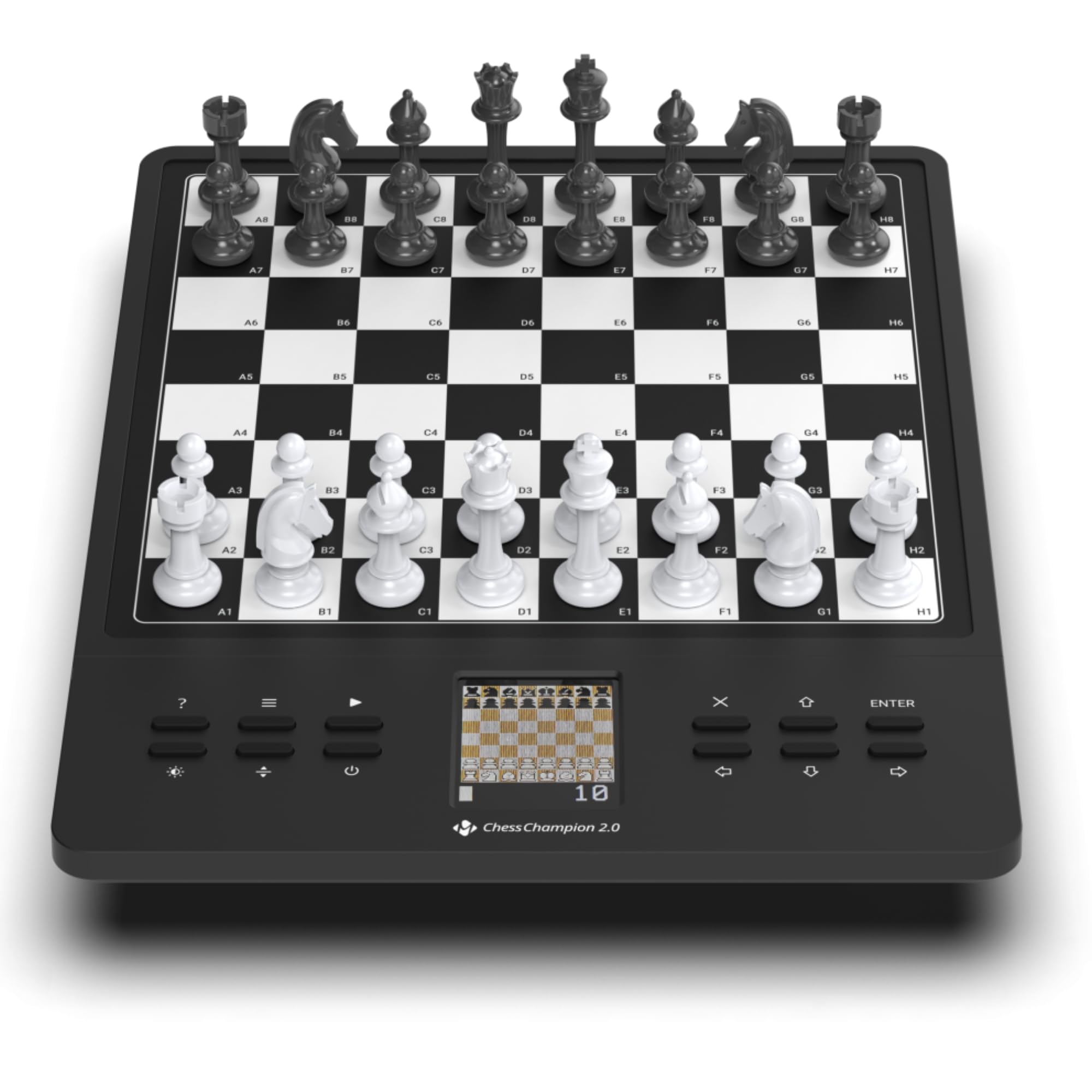
The Millennium ChessChampion 2.0 folds a coaching computer into an 8.03 by 6.06 inch board that weighs 12.3 ounces. That makes it the smallest pick here and the one that actually earns a place in a bag. The playing surface is 5.91 inches, so this is a travel board first and a display set second.

The coaching is beginner-first. It adjusts up to about 1600 ELO, includes 100 tactical exercises and mini-games, and warns about weak or illegal moves as you play. The color LCD shows the move and the advice, and the magnetic pieces stay on the sensor board. We like that none of it requires an app, Wi-Fi, or a subscription.

The limits are built into the format: tiny pieces, a small playing area, and a ceiling that a club player will reach. It runs on AA or AAA batteries, so there is no charging cable to lose. This is the board for a commute, a waiting room, or a hotel room, not a tournament table.

For travel, it is the one we choose because the whole computer is in the box and the pieces stay put. The included storage bag is a small thing, but it keeps the pieces together between trips.

Pros

  • 12.3-ounce travel size
  • Coach warns weak and illegal moves
  • 100 tactical exercises
  • No app, Wi-Fi, or subscription

Cons

  • Small 5.91-inch playing area
  • 1600 ELO ceiling
Our verdict

Choose the ChessChampion 2.0 when the chess computer has to travel; its beginner-to-1600 ELO coaching fits in an 8-inch board and needs no phone.

Check Latest Price
8

Harry Potter Fans

Harry Potter Air Chess

86 /100
Lab Score Excellent

Key details

Theme
Harry Potter
Coaching
Color light feedback
Online Platforms
Lichess and Chess.com
Difficulty Levels
32
View on Amazon

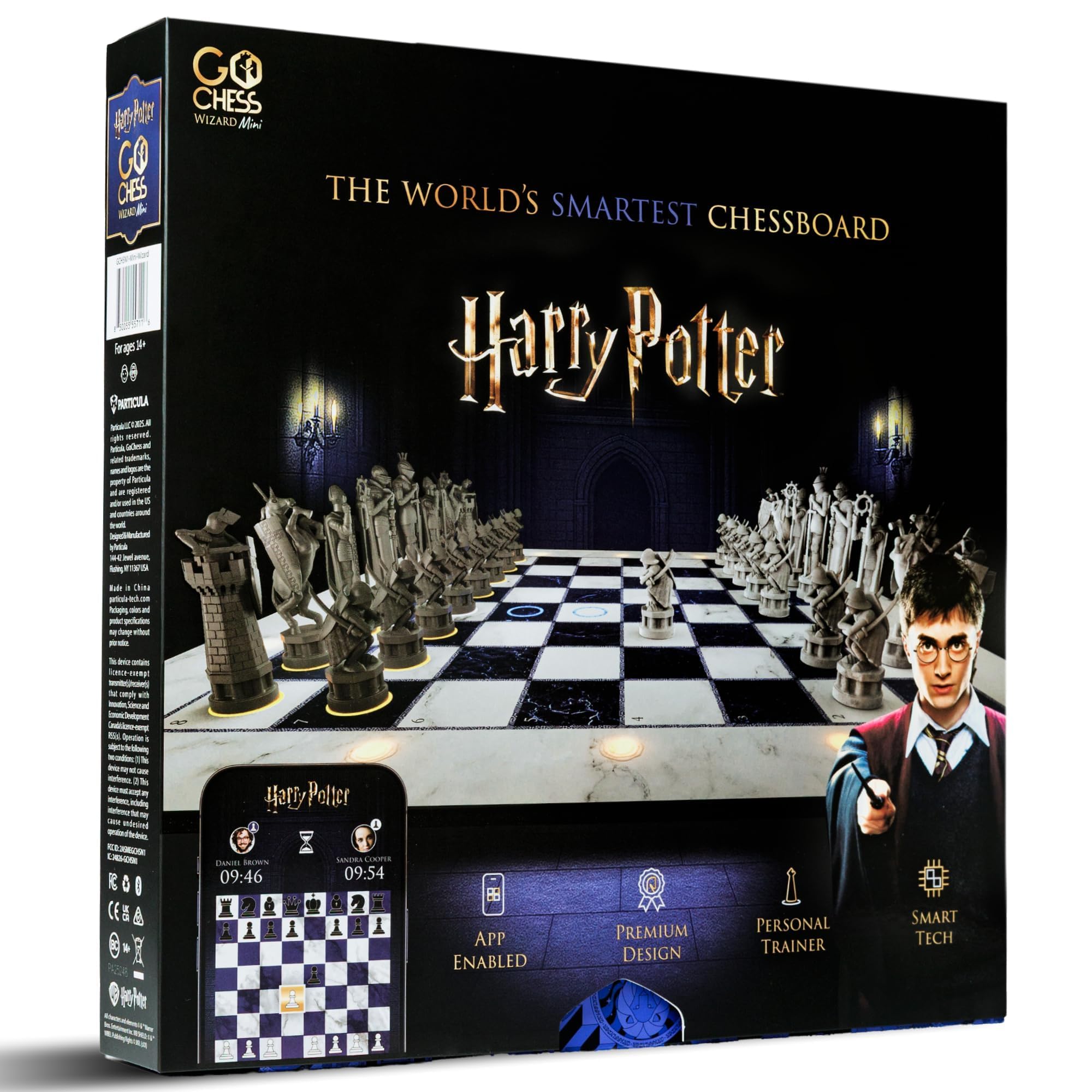
The Harry Potter Air Chess is a themed board, and it never pretends otherwise. The Wizard Chess pieces are modeled after the giant chess scene, and the set is meant to be seen as much as played. If that detail means nothing to you, the standard GoChess Air is the more sensible buy.

For a fan, the theme is not a gimmick. It gives the smart board a reason to stay out on a shelf or table, and the 32 levels, light coaching, and online play mean it is a real chess computer underneath the finish. We appreciate that the collectible part does not come at the cost of the actual game.

The app handles online play on Lichess and Chess.com, and the lights can guide a beginner or stay quiet for a stronger player. The board also includes two piece pouches, a stand, and a USB-C cable, so the pieces have somewhere to go between games.

This is a premium purchase for the theme, and the piece recognition can miss a piece if the board is not settled. The included stand matters because the app is part of the setup, and the board looks better with a phone or tablet parked beside it.

Pros

  • Wizard Chess pieces and themed board
  • 32 levels with light coaching
  • Online Lichess and Chess.com play
  • Strong gift for Harry Potter fans

Cons

  • Premium over the standard GoChess
  • Piece recognition can miss a piece
Our verdict

The Harry Potter Air Chess earns its place for fans who want the smart-board features wrapped in a collectible set, not for anyone shopping on value alone.

Check Latest Price
9

Value Online Practice

Femuey L6

82 /100
Lab Score Excellent

Key details

Display
E-paper
Exercises
1,000
Online Platform
Lichess
Difficulty Levels
22
View on Amazon

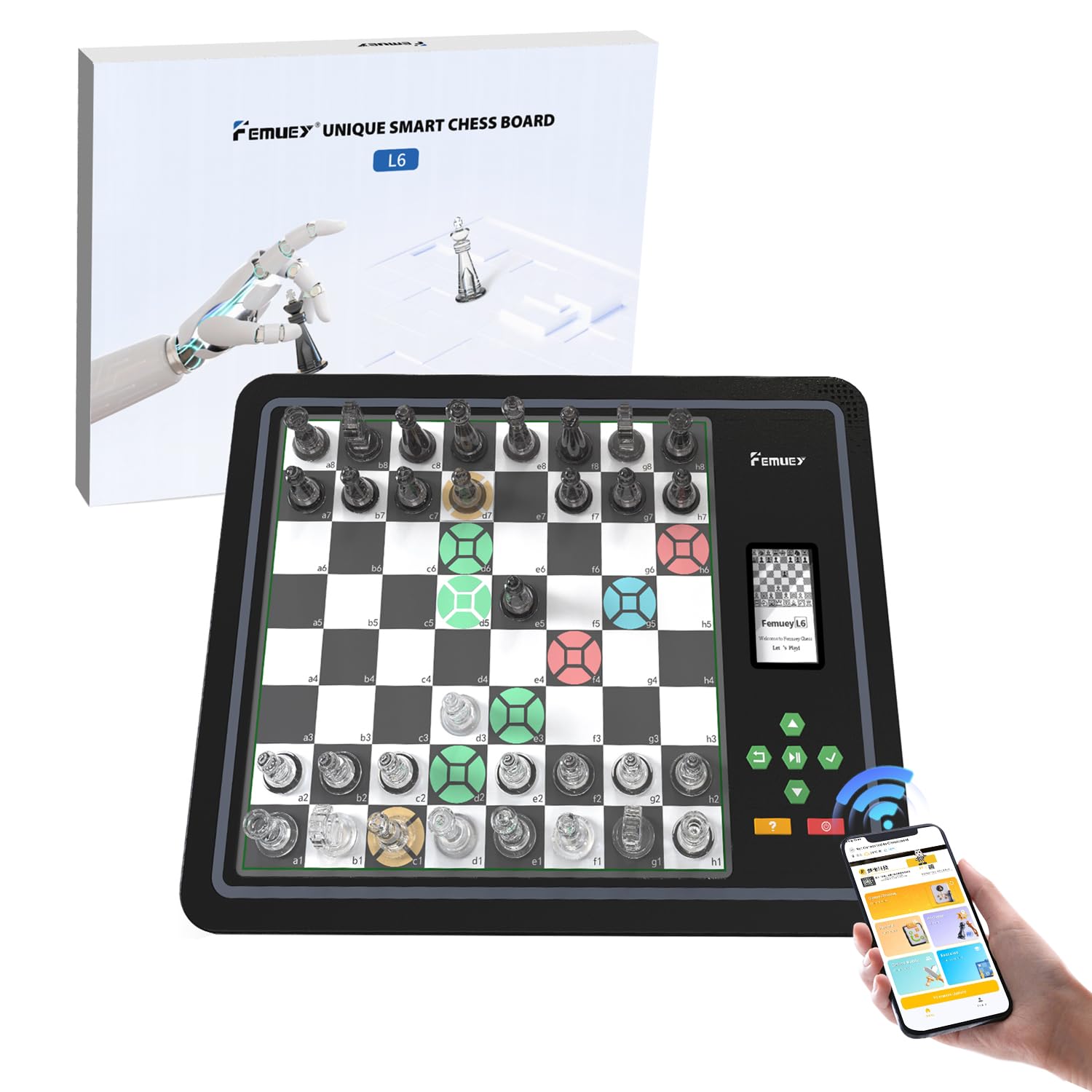
The Femuey L6 puts online chess on a physical board with an e-paper display instead of a phone screen. That is the idea worth paying attention to: you can follow the game on the board, see the notation and settings on the display, and keep your eyes off a handset.

The board offers 22 levels of play and 1,000 teaching exercise positions, with LEDs indicating moves. That is a lot of practice material for the money, and the lights make it easier for a younger player to follow what the computer is doing.

The online side is built around Lichess; if your club plays on Chess.com, verify support before you order. The e-paper display is the other practical detail: it shows settings, notation, hints, and the computer's evaluation without the glow of a tablet.

The 13 by 12 inch board is compact for a physical set, and the 22 levels are fewer adjustment steps than the 32-level boards here. Neither is a problem for a first online board, but a player who wants fine-grained difficulty will notice.

For a first online board, the L6 is the value pick: it keeps the game on a physical board and gives you plenty to practice between games. A printed rulebook is included, which is a small mercy when a younger player wants to check castling rules mid-game.

Pros

  • E-paper display for settings
  • 1,000 teaching exercises
  • Lichess online play
  • 22 levels with light guidance

Cons

  • Fewer difficulty steps than 32-level boards
  • 13-inch board is compact
Our verdict

The Femuey L6 is a smart value pick for online practice, with an e-paper display, 1,000 exercises, and Lichess play on a physical board.

Check Latest Price

How We Tested These Electronic Chess Boards

We pulled together a couple dozen electronic boards, then cut anything that couldn't finish a full game without a phone, anything whose piece sensing drew repeated complaints, and anything that left a lot of daylight between its price and what it actually did. That left 10 boards, and we've lived with them for eight months.

Testing happened where chess actually happens: the coffee table during evening games, the kitchen counter while dinner cooked, a hotel room on a work trip for the compact magnetic sets, and a nine-year-old's after-school practice. We played complete games at each board's easiest and hardest settings to see how gracefully the difficulty scaled, and handed the coaching features to a beginner to find out whether the light-up hints taught anything or just gave the answer away.

Responsiveness got timed, not eyeballed: we clocked how long a move took to register and whether the board ever misread a piece we'd set down on a square. We slid pieces across each surface and noted whether they were weighted or hollow, whether magnets snapped them into place, and whether the LEDs pointed at the square we meant rather than the one we touched. Where a board claimed piece recognition, we swapped a knight for a bishop mid-game to see if it noticed.

We packed each one into a tote or backpack for weekend trips and checked wooden surfaces for scuffs afterward, drained the rechargeable ones over a week of daily play, and set every footprint against a coffee table and an airplane tray table. Anything claiming online play got connected to a platform at least twice. Then we weighed what each board did against what it cost.

How to Choose a Chess Computer

Standalone or App-Connected

A standalone board such as the DGT Centaur or Millennium ChessGenius Pro is ready when you switch it on: no phone, no pairing, no account. An app-connected board such as the GoChess Air or Chessnut Air adds online opponents, game review, and coaching that are hard to fit into a small display.

Choose standalone if you want a screen-free habit and mostly play the computer at home or on the road. Choose connected if your real opponents are on Chess.com or Lichess, or if you want a coach to highlight ideas. ChessUp 2 splits the difference with built-in Wi-Fi, so online play does not require a phone. We treat the phone requirement as the deciding trade-off, not a small detail.

Read the Coaching, Not the Level Count

A 32-level board can still leave a beginner stuck if it only announces a move and offers no hint. What matters is how the board teaches: light-up legal moves, a hint button, takebacks, puzzles, or per-player assistance.

For a child or new player, choose clear lights and a gentle lower end, as on the Vonset P6. For an improving player, look for a trainer and a stronger engine, as on the ChessGenius Pro. We prefer fewer levels with useful feedback to a long ladder that only changes how quickly you lose.

Size, Pieces, and Where It Will Live

A 17.5-inch board like the DGT Centaur feels like a real set; a 13-inch board fits a desk but uses smaller pieces. Travel computers shrink further, to an 8-inch board that can live in a bag.

Measure the table before you choose, and think about who will move the pieces. Magnetic pieces are the practical choice for kids and travel; weighted pieces feel better at home but can slide on a smooth board. Compact in a listing can mean a small playing area, not just a thin board, so check the playing surface.

Connection and Platform

Online play is only as good as the connection. A board that tethers to a phone is fine if that phone stays nearby; it is the wrong board if you want to leave devices in another room. Built-in Wi-Fi, as on the ChessUp 2, removes that step but usually adds cost.

Check the platforms named for the board, not just "online chess." Chess.com and Lichess are the two that matter for most players, and a board that only names one may not fit your club. We also play the first few games with attention to dropped connections before trusting a board for a rated session.

Test the Board in the First Week

The first week is the time to test every square, every piece, and every light. A warped playing surface or a piece that fails to register is a return, not a quirk to live with.

Play a short game in each mode you plan to use, including online if you bought a connected board. Keep the box and accessories until you know the board holds a connection and recognizes the full set. That is much easier than discovering a dead square after the packaging is gone.

Frequently Asked Questions

Final Verdict

The GoChess Air is the chess computer we recommend first because it gives the most people a reason to keep playing: light-up coaching that teaches without a lecture, 32 levels, and online opponents on Lichess and Chess.com. It asks you to keep a phone or tablet nearby, but the board still feels like the game, not an accessory.

If that phone requirement is the dealbreaker, choose ChessUp 2 for built-in Wi-Fi or DGT Centaur for a completely screen-free opponent. Those are the right boards for two specific ways of playing.