Best Card Games of 2026

A good card game has one job: keep everyone at the table from reaching for a phone. That's harder than it sounds. The box promises fifteen minutes and ages 7 and up, and then the first round vanishes into a rulebook while the youngest player loses interest. The right deck fixes that — everybody is playing within a minute of opening it, and someone asks for another hand before the first one ends.

I'm the designated game-night person in my family, so I have opinions. Over the past five months, my team and I played 18 decks — press-your-luck party games, rummy-style classics, quick-play travel decks — with kids, adults, and lopsided mixed tables. The ones that hold up share a few quiet traits: cards big enough to fan in small hands, a finish that isn't slick after a dozen shuffles, and a player count that actually works at both ends of the range printed on the box.

Everything below was picked for a group that wants to start playing fast. Nothing here is a two-hour strategy epic — that's a different list.

1

Best Overall

SKYJO

96 /100
Lab Score Outstanding

Key details

Ages
8 and up
Players
2 to 8
Play Time
30 minutes
Included Supplies
150 cards, notepad, manual
View on Amazon

Two players or eight, the same small deck works. SKYJO seats a full table without teams or a second box, and that flexibility is why it is our top pick. The goal is simple: finish with the fewest points after uncovering, exchanging, and collecting cards. The rules are short enough to explain while you deal, and a round lands in about 30 minutes.

We appreciate the pace most when the table is mixed. Turns move quickly, the scoring is easy to follow, and nobody is left waiting through a long turn. The 150-card deck comes with a notepad and a manual, and the addition is gentle enough for an 8-year-old to handle without slowing the game down. That stealth math practice is a bonus, not the reason to buy.

The game is not a deep strategy contest, but it does ask you to decide which cards to expose and which to keep. We found the best tension comes near the end of a round, when one more exchange can rescue a bad hand. Keep the notepad with the deck; it is the one piece that tends to go missing.

Pros

  • Seats two to eight without teams
  • Quick to teach and easy to score
  • Rounds finish in about 30 minutes
  • Simple addition keeps younger players involved

Cons

  • Close games can turn on luck
Our verdict

For most family and friend tables, SKYJO is the card game we reach for first: two to eight players, a quick teach, and a half-hour session.

Check Latest Price
2

Best Classic Family Rummy

Five Crowns

98 /100
Lab Score Outstanding

Key details

Ages
8 and up
Players
1 to 7
Game Style
Rummy with rotating wilds
Included Supplies
Cards, rulebook
View on Amazon

The wild card changes every round, and that single rule keeps Five Crowns from feeling like another rummy deck. You make books and runs with a fifth suit of stars, then adjust when the wild shifts under you. It is familiar enough for grandparents and different enough that the table does not settle into autopilot.

We recommend it for family game night because the learning curve is short but the rounds are not identical. With one to seven players and an 8-and-up age range, it works for a couple, a foursome, or a full table. The rules are brief enough to refresh at the table, and the fifth suit gives every hand a different shape.

The fifth suit of stars is not just decoration; it changes how you read a hand. The rotating wild means the hand you build in one round is not the hand you need in the next, which keeps the table from settling into a rut. At 6.4 ounces, the box is light enough to bring along without thinking about it.

Pros

  • Rotating wild card keeps rounds fresh
  • Familiar rummy rules for mixed ages
  • Plays one to seven
  • Light 6.4-ounce box travels well

Cons

  • Cards can stick together
  • Box is flimsy
Our verdict

For a classic family card game with a little more bite, Five Crowns is our pick: rummy-style rounds, a rotating wild card, and room for up to seven.

Check Latest Price
3

Best Party Game

Taco Cat Goat Cheese Pizza

96 /100
Lab Score Outstanding

Key details

Ages
8 and up
Players
2 to 8
Play Time
15 minutes
Game Style
Slap-match party game
View on Amazon

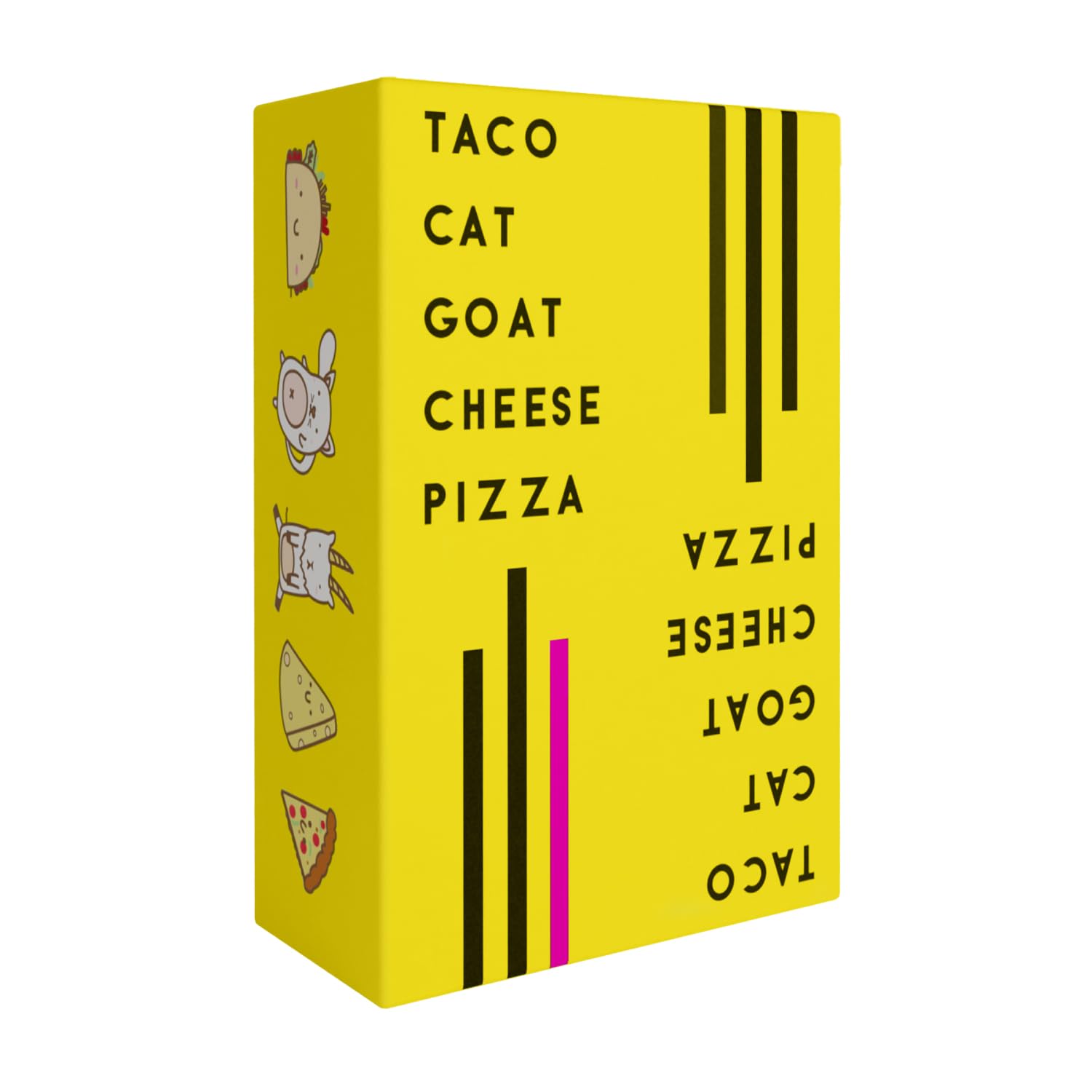
The first slap is the tell: this is not a quiet card game. Players chant the title in order, play cards, and race to slap the pile when a spoken word matches the card. That simple loop is why we hand it to a group that needs permission to be silly. The 15-minute window is realistic for a few rounds, and the box is small enough to travel in a coat pocket.

The rules take a minute to demonstrate, and the action cards add just enough disruption to keep the chant from becoming mechanical. We appreciate that the game works with two, though it is at its best with a table full of people who are willing to be loud. Nobody sits out long, and the scoring is minimal.

The deck is the whole game, so there is nothing to assemble and nothing to lose except the cards themselves. We keep it in the box and away from drinks, because the pace is fast enough that a spill is the main threat. The 3.2-ounce box and single deck make it the easiest game here to bring along. That small footprint is the reason it lives in a bag rather than a shelf.

Pros

  • Fast, loud party energy
  • Easy enough for kids to join
  • Small deck travels anywhere
  • Short rounds keep attention

Cons

  • Slap pile can sting hands
  • Cards can get bent during play
Our verdict

Taco Cat Goat Cheese Pizza is our party pick: it turns a tiny deck and a chant into a loud, fast, laugh-heavy game for two to eight.

Check Latest Price
4

Best Quick Strategy

Monopoly Deal

96 /100
Lab Score Outstanding

Key details

Ages
8 and up
Players
2 to 5
Play Time
15 minutes
Included Supplies
110 cards, instructions
View on Amazon

Fifteen minutes is the pitch, and the game keeps it by cutting the board and the long clean-up. You collect three property sets, use action cards to charge rent or steal, and try to hold a complete set long enough to win. The deck is small, the rules are short, and the turns are quick.

We recommend it as the budget strategy pick because it gives a table a real decision without a long teach. The 110-card deck comes with reference cards, which matters when a new player needs a reminder about what an action card does. The whole thing is smaller than a paperback, so it disappears into a backpack pocket.

The stealing is the engine, and it is the part we enjoy most: a carefully built set can change hands, then come back with the right action card. A round can turn on one well-timed rent card, which is exactly the kind of swing that keeps a short game from feeling disposable.

Pros

  • Fifteen-minute play time
  • Property stealing adds real decisions
  • Reference cards ease the teach
  • Small enough for a backpack

Cons

  • Seats only five players
Our verdict

Monopoly Deal is the quick strategy card game we recommend for family game night, with the property-trading tension of the board game in a fraction of the time.

Check Latest Price
5

Best Family Strategy

Cover Your Assets

96 /100
Lab Score Outstanding

Key details

Ages
7 and up
Players
2 to 6
Play Time
20 to 40 minutes
Game Style
Steal-and-defend set collection
View on Amazon

The steal-and-defend loop is the whole appeal. You build asset stacks, then watch another player try to take them, and the table reacts because the target is visible. The rules are simple, but the choices are not empty: you decide what to protect, what to expose, and when to go after someone else's pile.

It plays two to six, ages 7 and up. We noticed the game lands best when the table is willing to be a little ruthless; the fun comes from the back-and-forth, not from quietly building a hand. The 9.6-ounce box is small enough to bring to a family gathering.

We recommend it for family strategy nights because it gives kids a real decision without a rulebook lecture. The competition is direct, but the mood stays light as long as everyone understands that a steal is part of the game. The asset stacks are easy to read across the table, which keeps the game moving.

Pros

  • Steal-and-defend loop keeps tension
  • Easy rules for family night
  • Plays two to six
  • Rounds run 20 to 40 minutes

Cons

  • Steals can swing a round sharply
Our verdict

Cover Your Assets is our family-strategy pick: a two-to-six-player set-collection game where stealing a fortune is part of the fun and rounds stay quick.

Check Latest Price
6

Best Press-Your-Luck

Flip 7

98 /100
Lab Score Outstanding

Key details

Ages
8 and up
Players
3 or more
Play Time
20 minutes
Included Supplies
94 cards, rules
View on Amazon

A duplicate number ends the round, and that is the moment Flip 7 is built around. Each draw adds points, but a second card with the same number busts the run. The deck is stacked with multiples of every number, so the risk climbs as the round goes on.

The action cards — Flip Three, Freeze, Second Chance, and Score Modifier — give the table something to react to beyond the draw. It plays in about 20 minutes, and the 94-card deck is small enough to toss in a bag. The addition is simple enough for an 8-year-old, but the bust risk keeps adults engaged.

We recommend it as a quick opener because the tension arrives fast and the rounds reset before anyone gets frustrated. The score modifier cards keep the final total from feeling predetermined. Second Chance is the card that changes the mood: it turns a bust into a reprieve, and the table reacts every time.

Pros

  • Bust risk creates instant tension
  • Twenty-minute rounds
  • Simple addition for younger players
  • Ninety-four-card deck is very small

Cons

  • Needs at least three players
Our verdict

Flip 7 is our press-your-luck pick: a tiny deck, a simple draw, and a tense race to 200 points that keeps a table leaning in.

Check Latest Price
7

Best for Mixed-Age Groups

UNO

96 /100
Lab Score Outstanding

Key details

Ages
7 and up
Players
2 to 10
Storage
Metal tin
Accessibility
Colorblind symbols
View on Amazon

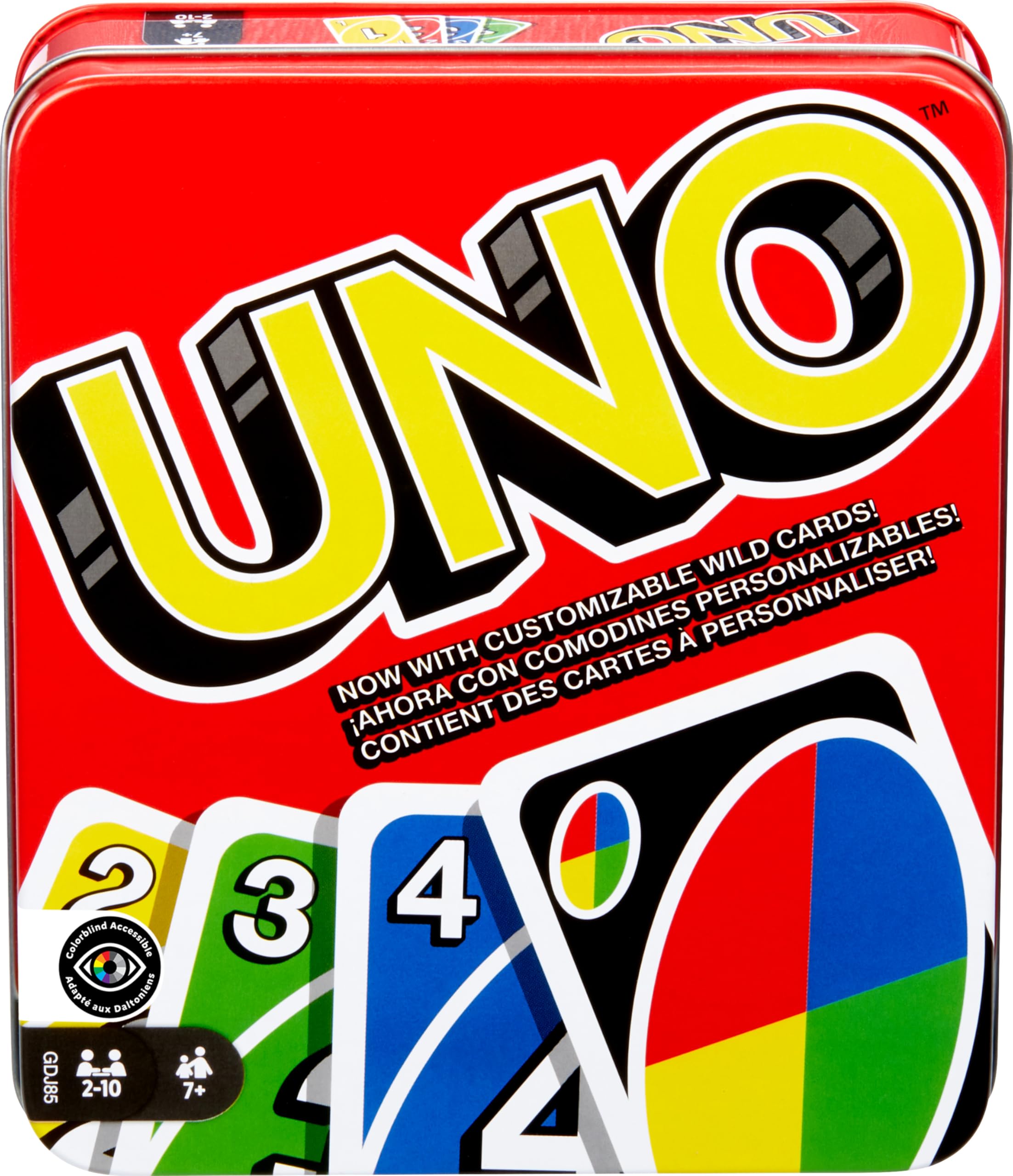
The small color symbols printed on each card are easy to miss until you need them. UNO's colorblind-accessible deck uses graphic symbols to identify colors, so a player who cannot separate red from green can still follow the match. That detail makes this version more than a nostalgia buy.

The game itself is the UNO you know: match colors or numbers, use action cards, and yell when you are down to one. The 112-card deck comes in a metal tin, which keeps the cards together better than a paper box. It plays two to ten and is rated for ages 7 and up.

The rules are almost self-teaching. A 7-year-old can play alongside an adult, and the scoring to 500 gives a session a clear finish. The action cards add just enough chaos to keep a familiar deck from feeling stale.

The accessibility is what makes this version worth choosing over a plain deck. A player who has struggled to separate colors can join without a workaround, and the rest of the table barely notices a difference. The symbols are the part we notice now when we play a standard deck.

Pros

  • Seats two to ten
  • Colorblind-friendly symbols
  • Metal tin protects the deck
  • Rules are easy to teach

Cons

  • Tin is bulky for travel
Our verdict

UNO is the two-to-ten-player staple we recommend for mixed-age tables, especially when someone needs the colorblind-friendly symbols.

Check Latest Price
8

Young Card Players

Regal Games 6-Deck Set

96 /100
Lab Score Outstanding

Key details

Ages
4 to 12 years
Players
2 to 6
Card Size
Extra-large
Included Supplies
Six card decks
View on Amazon

The age-four starting point is the reason this set earns a spot. Instead of one game with a rulebook, you get six decks of childhood classics: Go Fish, Crazy 8's, Old Maid, Slap Jack, Garbage Monster, and War. The cards are extra-large, which makes them easier for small hands to hold and sort.

The set is a sampler, not a strategy collection. Each deck has its own simple rules, and the symbols and colors are bold enough for a young player to follow. The tin keeps the six decks together, which matters when the set lives in a car or a grandparent's cupboard.

We noticed the variety does most of the work. A child who tires of Go Fish can move to Slap Jack without a new purchase, and the familiar games give adults a short refresher rather than a full teach. The bright colors and simple symbols make the decks feel inviting rather than babyish.

We recommend it as a first card-game set because it lowers the pressure to get the rules right. The point is to keep a 4-year-old engaged, not to test an adult's strategy. The tin is the practical bonus: it turns six loose decks into one grab-and-go box.

Pros

  • Six classic games in one set
  • Extra-large cards for small hands
  • Ages 4 to 12
  • Tin keeps decks together

Cons

  • Simple games may bore older kids
Our verdict

Regal Games' six-deck set is our pick for young card players: big cards, familiar games, and a low-pressure way to start at age four.

Check Latest Price

How We Played Our Way Through 18 Card Games

We built the shortlist from bestseller lists, the review sections of games that have survived decades of family holidays, and the titles that keep resurfacing in game-night threads. Filtering by player count, age range, and whether a game could be taught in under five minutes left us with 18 decks. Each one got at least five plays over five months — kitchen tables on Sunday afternoons, the back seat on road trips, and the ten minutes before dinner when nobody wants a rulebook.

The first test was always a cold teach: I handed the rules to someone who had never seen the game and timed how long before the first card was played. Anything needing a second read-through got marked down. Then we played each deck at the minimum and maximum player counts printed on the box, since a game that sings with four can be miserable with two and chaos with eight.

Card handling got its own pass. We shuffled each deck until our hands were tired, watching for corners that frayed, finishes that turned greasy, and cards that slid off the table instead of stacking. Every deck was counted against its listed contents after the first week, since a missing card only shows up mid-game, and we compared card size to a standard poker deck — a seven-year-old fanning ten cards tells you quickly whether a deck is usable.

Family-friendly meant a seven-year-old and a grandmother in the same round, and noticing whether anyone got knocked out in the first three minutes and spent the rest of the night watching. We judged pacing by silence and phones; long stretches where nobody could do anything counted against a game. After the first month we stopped tallying plays and just watched which decks kept ending up on the table — that's the value test that matters.

How to Choose a Card Game

Start with the real player count

Box ranges are a starting point, not a promise. A game that seats eight can still be best with four, and a two-player mode can feel tacked on. Count the people who actually sit down on a normal game night, then check the ends of the range. SKYJO and UNO cover the widest spread here; Monopoly Deal tops out at five, and Flip 7 needs at least three. If you often play as a couple, Five Crowns and Cover Your Assets are the safer two-player choices.

Decide how much luck your group tolerates

Card games live on a spectrum from chance to light strategy. SKYJO and Flip 7 are built on swings: a good draw can rescue a round, and a bad one can undo careful play. Five Crowns and Cover Your Assets give players more room to plan, but neither is a heavy strategy game. Match the game to the group's appetite for surprise. A table that groans at every lucky draw will be happier with rummy or set collection; a table that likes shouting at the deck will get more from press-your-luck.

Read the age and content line

An age rating is about more than reading level. Games for 8-and-up assume players can read cards and hold a hand, while a 4-and-up set like Regal Games relies on matching, colors, and very short rules. Party games can also carry physical contact. Check who is at the table before you buy, and choose a version with accessible markings if color vision is a concern; UNO's symbols are the clearest example here.

Plan for the table, the bag, and the wear

Short sessions get played. A 15-to-30-minute game fits a weeknight; a 40-minute game is still reasonable for a planned game night, but it needs a group that enjoys the longer arc. Storage matters too. A metal tin protects cards better than a thin box, though it can be bulkier in a bag. Cards are paper, and slap games put them under extra stress, so store the deck in its box and keep drinks away.

Frequently Asked Questions

Final Verdict

For most tables, SKYJO is the one to buy first. It seats two to eight, explains itself in a few minutes, and finishes in about half an hour, a combination that makes it easy to get to the table on a weeknight. If your group prefers a familiar rummy rhythm, choose Five Crowns; if the room is loud and wants a party, Taco Cat Goat Cheese Pizza is the better fit.